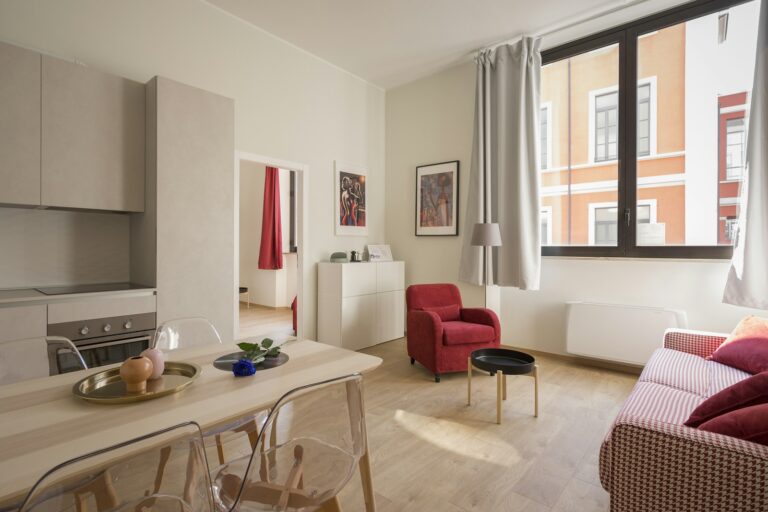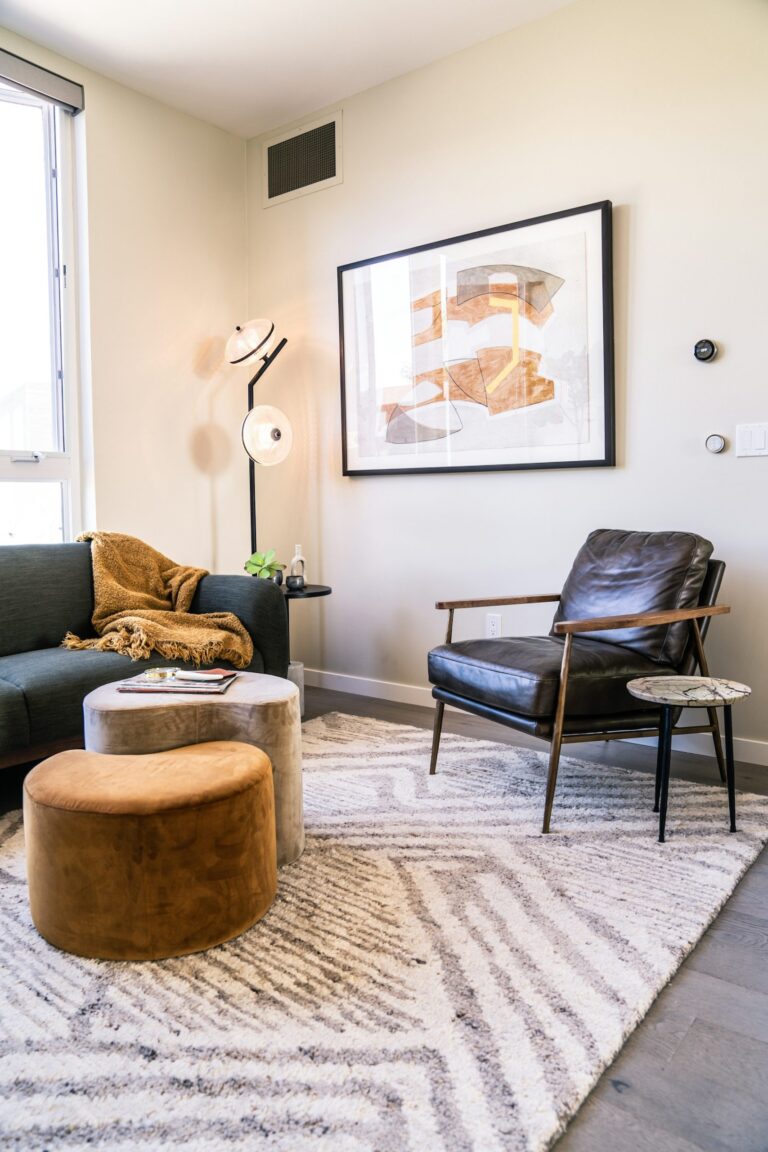
An entryway landing sequence matters because this small space is usually asked to solve too many problems at once. It is a shoe drop, a parcel shelf, a coat room, a charging station, a place to remember the dog lead, and a last look in the mirror before leaving. The usual response is to add storage until the wall looks busy. That works for a week. Then every surface becomes storage, which is another name for an unmade decision.
A better entryway has a landing sequence: you come in, put down what is in your hands, sit or lean long enough to take off shoes, check your face or coat, and move on. Four jobs. Four pieces at most. The sequence matters more than the square footage.
Start with a surface that is allowed to stay partly empty
The console table is not there to display everything you own. It gives keys, post, and the occasional delivered parcel a legal place to land. Leave at least a third of it clear. A narrow table with a basket below is more useful than a deep cabinet that invites you to hide an entire second household inside it.
Put one shallow tray or bowl on the surface. The moment a loose object has a destination, it stops asking the rest of the room to hold it. That is why a simple console works even in an entry that is only a corridor: it creates a pause in the route rather than another obstacle.
Give shoes a place that does not look like a shoe solution
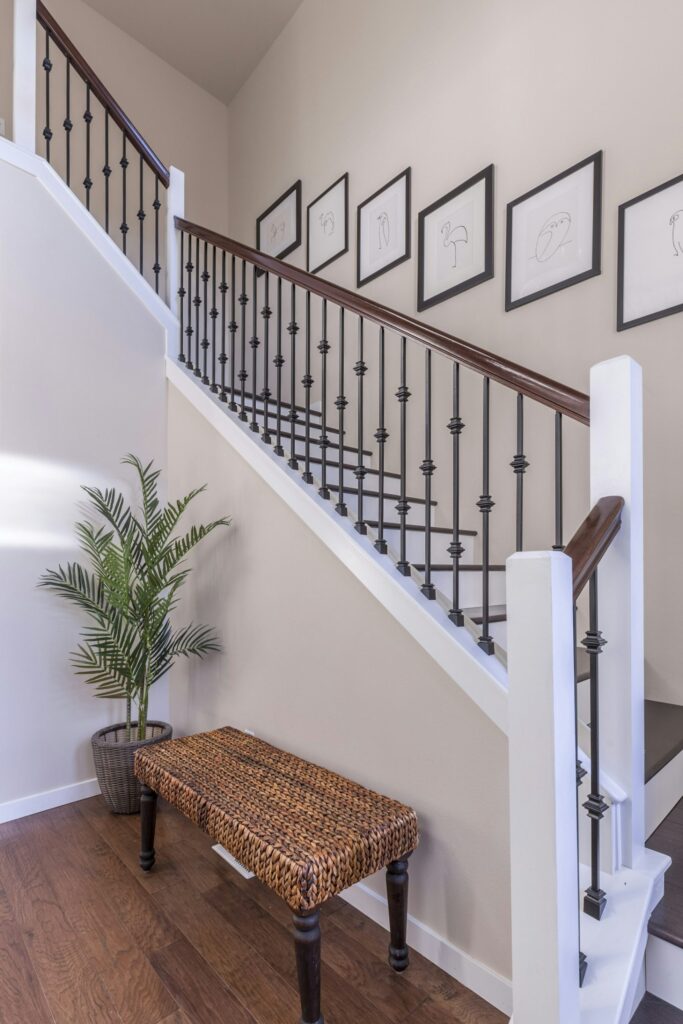
A bench earns its footprint when it makes leaving easier, not because it photographs well. It gives you the five seconds to tie a shoe without balancing against the wall, and it makes the entry feel like a room with a human purpose. Choose a bench with visible legs or air underneath. Solid, boxy storage benches can make a narrow entry feel like a waiting room.
The basket belongs nearby, not under every surface. One is enough for the soft, awkward things: a scarf, a reusable bag, a pair of indoor slippers. If the basket starts holding every shoe in the house, the problem is not basket capacity. It is that the rest of the routine has not been decided.
Use a mirror for light before you use it for scale
An arched mirror is often sold as a way to make an entry look larger. It can do that, but its more useful job is to catch the light coming from the nearest window or room and throw it back across the route. Hang it where it reflects an opening, not a blank wall. You get a brighter entry and the small courtesy of seeing yourself before you leave.
Keep the surrounding wall quiet. A mirror with a console, one lamp, and one contained basket is already an arrangement. Adding a gallery wall, a coat rack, and three decorative hooks turns the arrival sequence into a list of things to look past.
Test the entryway landing sequence after dark
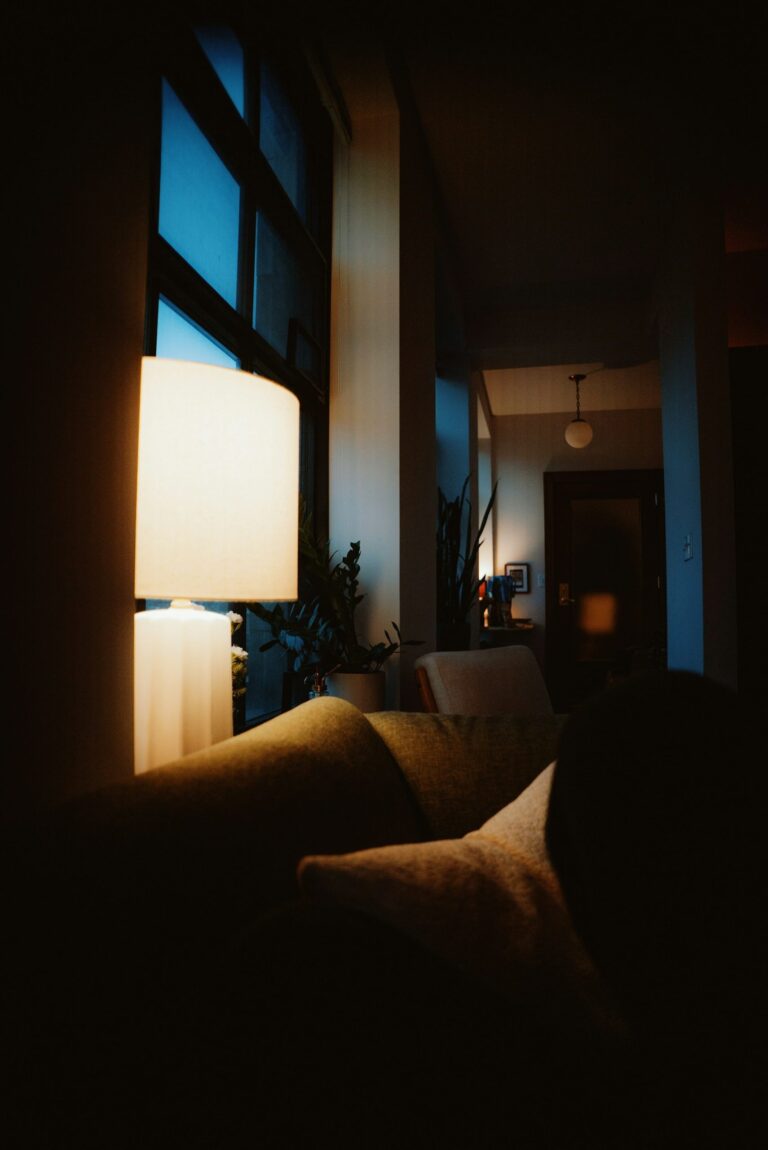
Overhead light is useful for finding a dropped key; it is rarely useful for making a home feel inhabited. A small lamp on a timer is better. It marks the entry as active before you are even inside, and it prevents the familiar late-afternoon move of switching on every ceiling fixture at once.
The test is simple: come home after dark with a bag in one hand. Can you put it down, take off your shoes, and move toward the rest of the house without turning on a harsh light or negotiating a pile? If yes, the entry is doing its job.
The compact entry edit
The entry edit keeps the exact sequence above: a console for arrival, bench for shoes, mirror for reflected light, a lamp for the evening, and one basket for the loose soft things.
See the complete Small Entry edit →
An entryway that works is not a storage unit with better styling. Its entryway landing sequence is the first small routine that makes the rest of the house easier to enter.
Photography by Francesca Tosolini via Unsplash, used under the free Unsplash License.