Most living rooms feel unfinished long before they are under-furnished. The giveaway is not an empty shelf. It is a set of large shapes that have never agreed on what the room is for: a rug that barely reaches the sofa, a coffee table that looks apologetic in the middle, curtains that stop halfway up the wall, and a lamp trying to make up for all of it.
Before buying another small object, settle the five shapes that control the room from across the doorway: the rug, the seating, the centre table, the window treatment, and the source of low light. When those agree, a room can be sparse and still feel considered.
Make the rug describe the conversation area
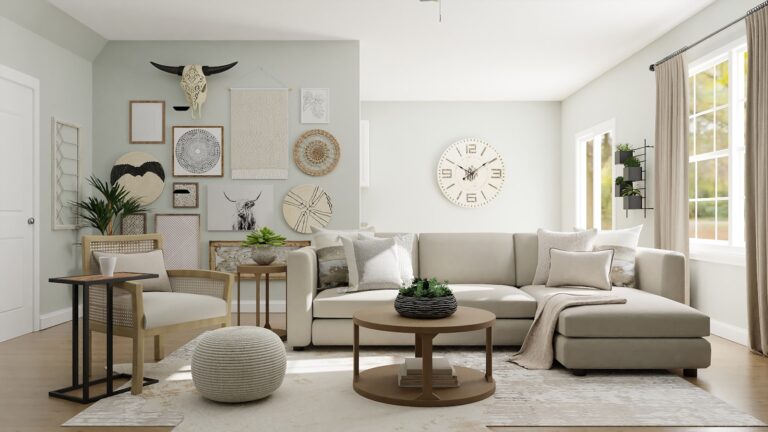
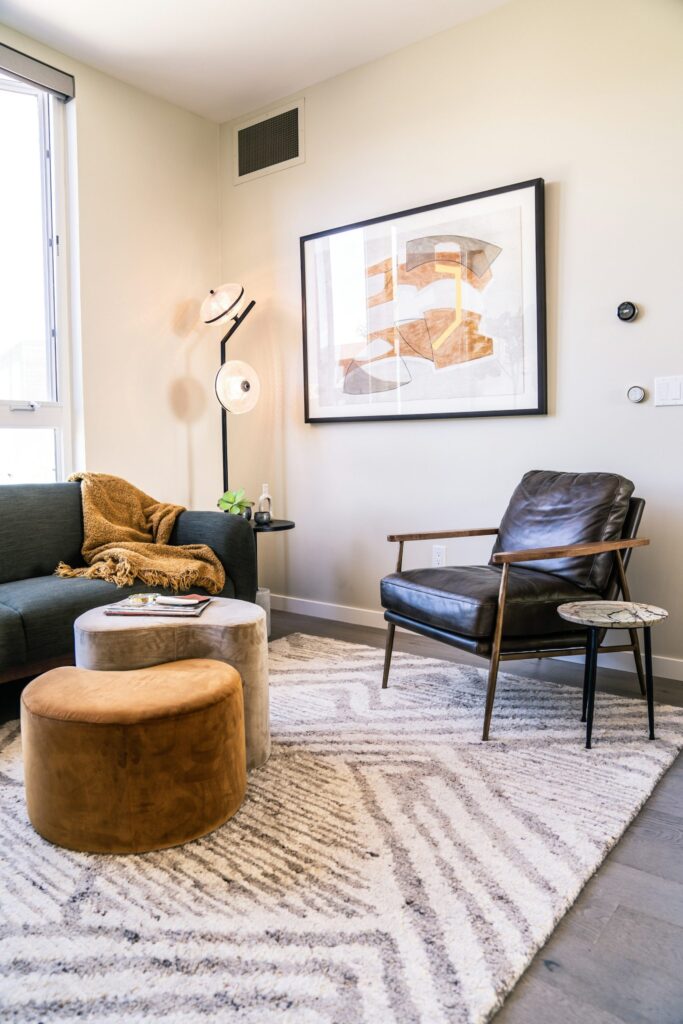
A rug is not decoration under furniture. It is the outline of the room’s social zone. In most living rooms, the front legs of the main seating should sit on it. If that is impossible, leave a deliberate, even border instead of a rug that floats like an island in the middle of the floor.
Natural-fibre rugs are useful here because they are quiet. They give the room texture without becoming a second pattern to solve. Their best quality is that they make the heavier shapes above them look intentional: chair legs, a wood table, the edge of a sofa.
Let one low table carry the centre
The coffee table does not need to match everything. It needs to be wide enough to register as the centre of the seating group and low enough that nobody has to reach over it. A round or softened rectangle is forgiving in rooms with multiple walking paths; it gives the eye a centre without making circulation feel like a maze.
Leave most of its surface unused. A book, a small vessel, and perhaps a tray are enough. The point is to create a place where a cup can land, not a miniature store display.
Use one chair as punctuation, not a matching set as a rule
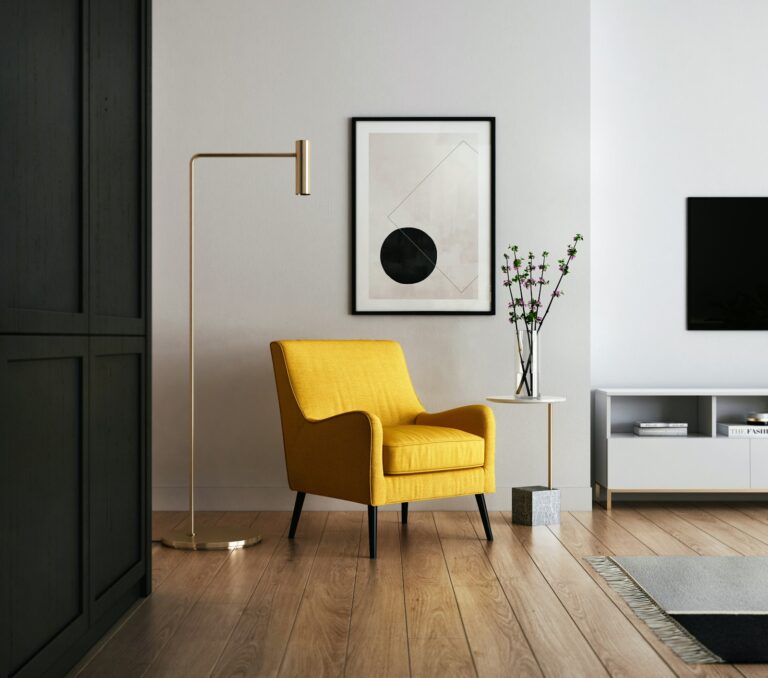
A room with a sofa and two identical chairs can be perfectly good. It can also be the fastest route to a catalogue spread. One strong chair, turned slightly toward the conversation, gives the room an edge and gives the person sitting there a reason to stay put. The key is scale: the chair should be visually substantial enough to hold its side of the room, not a decorative interruption.
Bring the curtains to the architecture, not the window
Hang curtains as high as the wall allows and let them reach the floor. This is not a styling trick so much as a way of making the window participate in the room. Short curtains make a window look like an appliance. Full-length curtains turn it into a vertical plane, which is why they can make an ordinary room feel settled before you change a single piece of furniture.
Finish with a pool of light, not a brighter ceiling
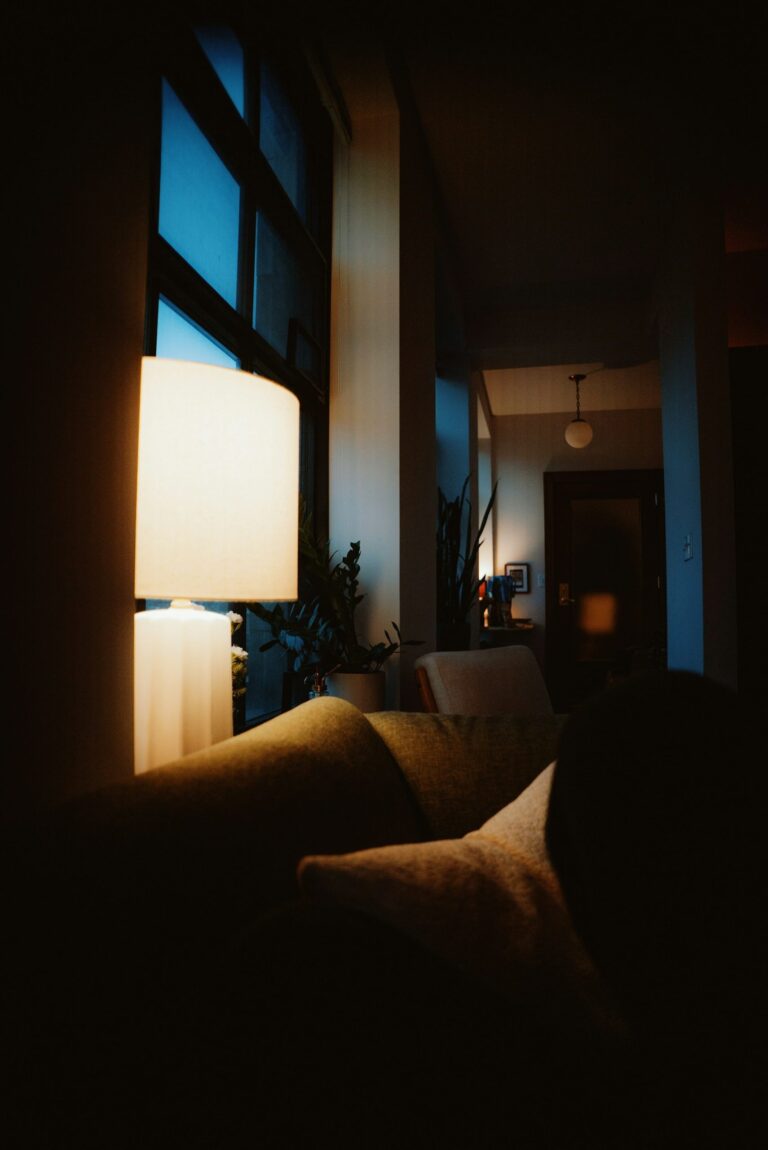
A floor lamp beside the chair or near the sofa creates an occupied corner. It gives the evening a place to happen. The bulb matters, but placement matters more: light the surface where someone reads, talks, or puts down a drink. Lighting the ceiling evenly makes every inch of the room equally visible and none of it especially inviting.
The living room edit
This edit contains the five pieces discussed here: an anchoring rug, one substantial chair, a low centre table, full-length curtains, and a floor lamp. It is not a prescription for a complete room; it is a way to get the large shapes into agreement first.
See the complete Calm Living Room edit →
Once the rug, seating, table, curtains, and light are speaking the same scale, stop. Live with the room before adding anything smaller. The final layer is easier to see once the room has stopped competing with itself.
Photography by Hayley Bagwell via Unsplash, used under the free Unsplash License.