Empty rooms are not automatically calm — a bare waiting room proves that. What reads as calm in a home is something more specific: nothing in the room is arguing with anything else. You can build that deliberately, and you don’t have to throw away your things to do it.
Lower the value contrast
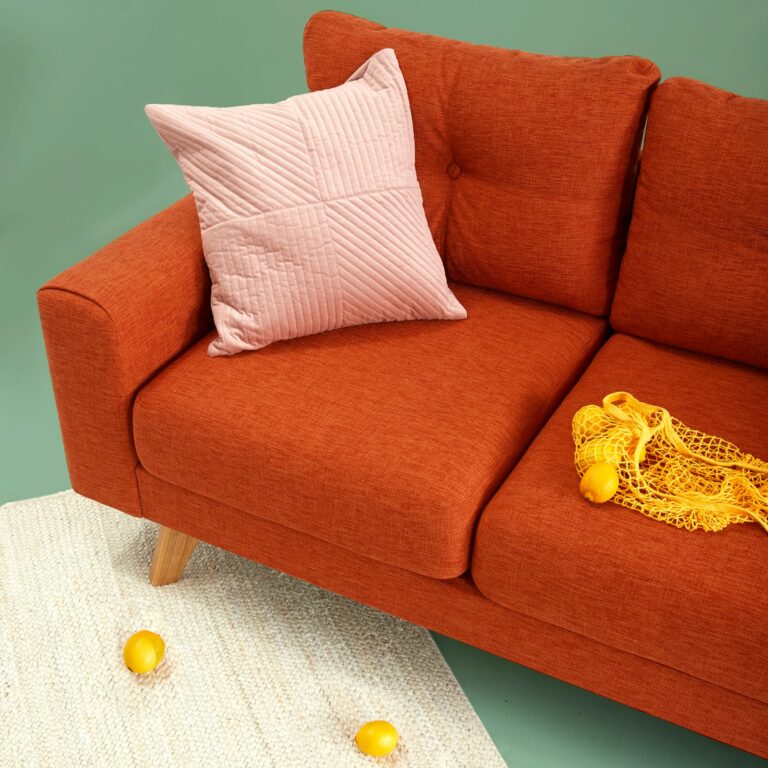
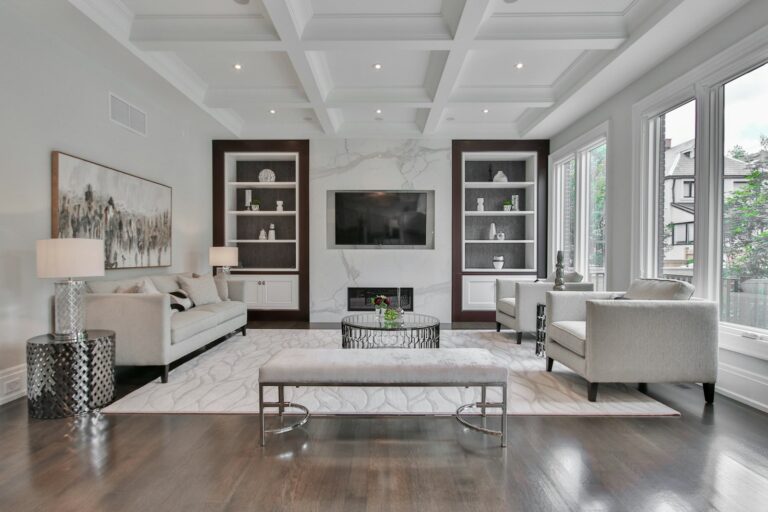
Value is how light or dark a color is, and it matters more than hue. A room of soft mid-tones — oat, clay, olive, greige — feels quiet even when it holds a dozen objects, because the eye slides across it without snagging. A single black-and-white gallery wall in that same room will dominate everything. That isn’t wrong; it’s just where the attention will go. Calm rooms keep most surfaces within a narrow value band and spend high contrast in one deliberate place, not five accidental ones.
Repeat materials until they read as intention
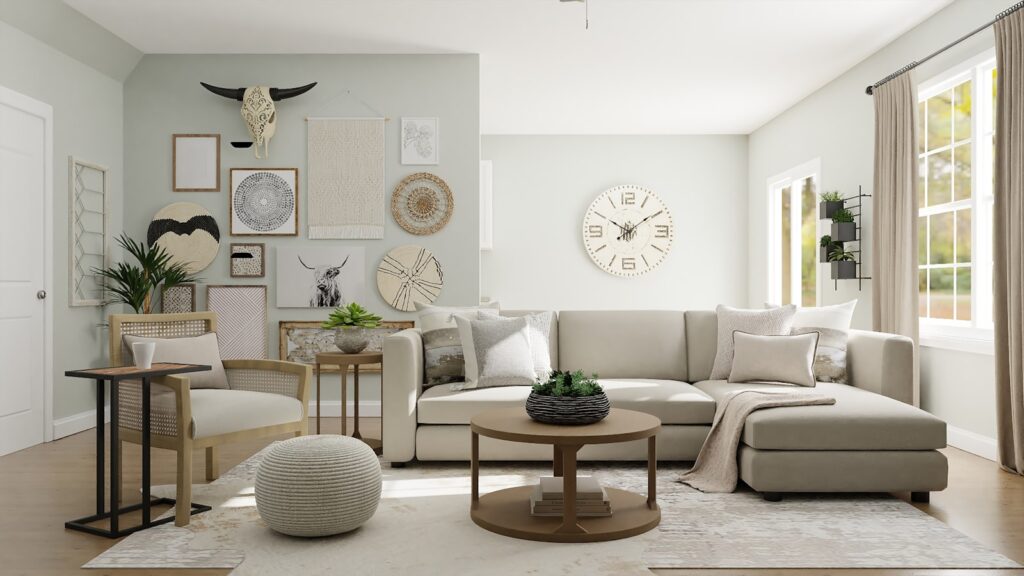
One oak object is furniture. Three oak objects are a palette. Repetition is what separates “collected” from “accumulated”: when the coffee table, the picture frame, and the tray share a tone of wood, the brain files them as one decision instead of three. If a room feels busy and you can’t say why, count the number of distinct materials in view. More than six or seven, and no amount of tidying will quiet it.
Warm the light, then dim it
Bulbs between 2700K and 3000K, always, everywhere in a living space — cooler than that and skin, wood, and textiles all go slightly corpse-ish. Then put the important lamps on dimmers or smart plugs. A calm evening room is lit at knee-and-shoulder height by two or three pools of warm light, with the overhead fixture off. The overhead is for cleaning.
Leave one surface empty
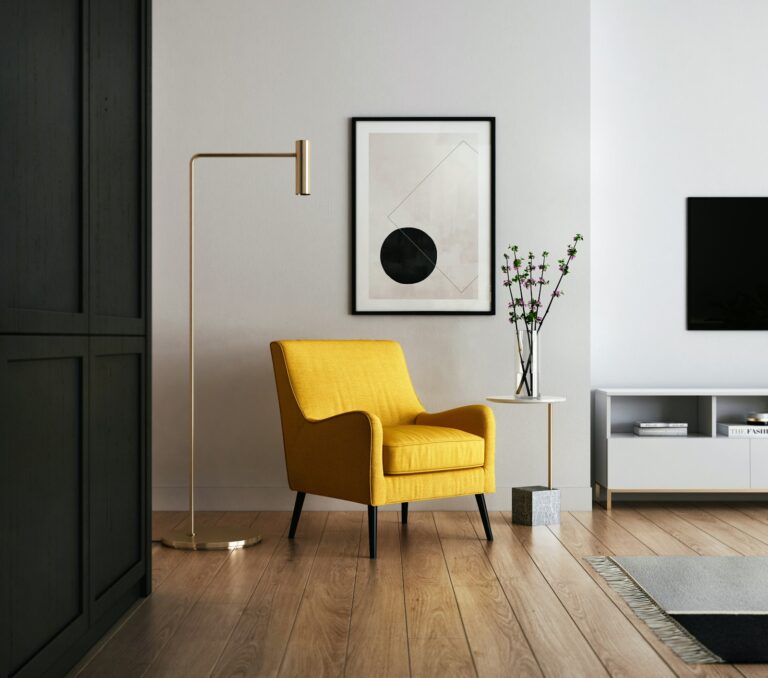
Not every surface — one. An empty stretch of console or a bare corner of the coffee table works like a rest in music. It signals that the objects elsewhere are chosen, not overflowing. This is also the cheapest advice in decorating: it costs nothing and reads instantly.
The Tuesday-morning test
Style disappears in photographs; calm shows up in person, on an ordinary morning, before anything has been straightened. If the room still feels settled with a blanket half-folded and yesterday’s mug on the table, the bones are right. If it only looks good staged, what you’ve built is a set.
Photography via Unsplash, used under the free Unsplash License.