If a living room feels unfinished and you cannot say why, look down. The most common culprit in real homes is a rug that is one or two sizes too small — a 120×170 doing a 200×300’s job, floating in the middle of the floor like a bath mat that wandered. Rug size is not a taste question. It’s arithmetic, and the numbers are below.
Living rooms: front legs on, always
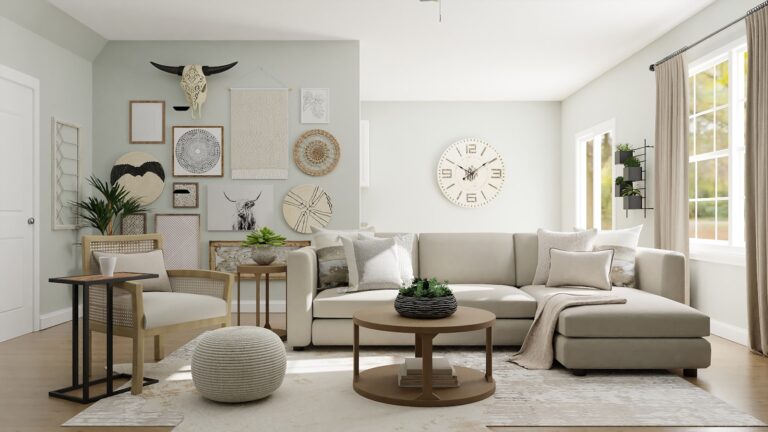
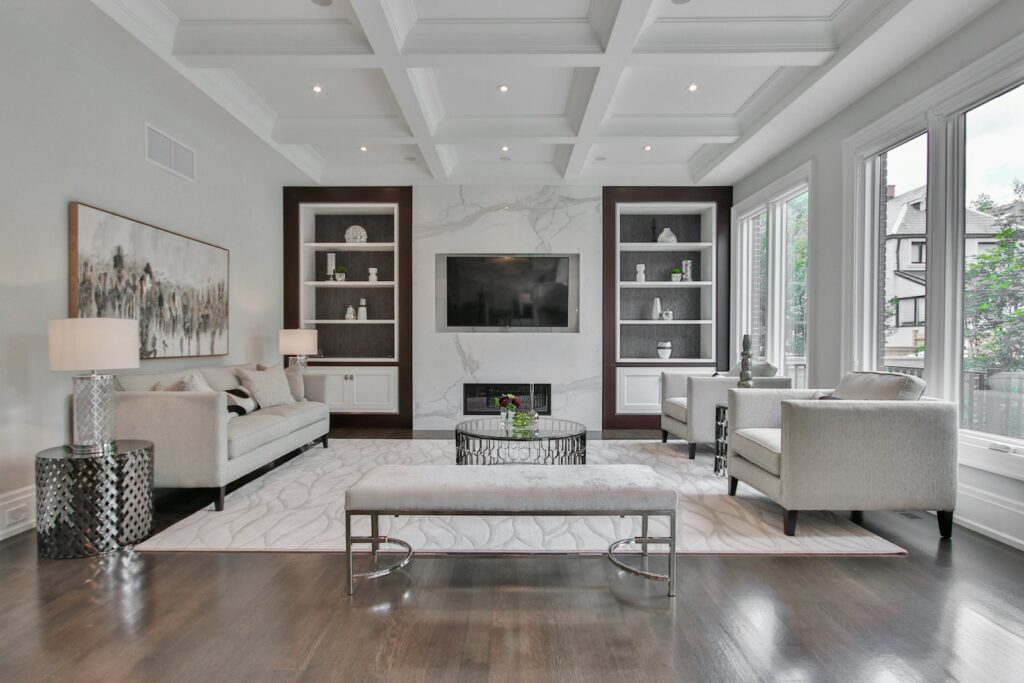
Every main seating piece should have at least its front legs on the rug. All legs on is better and costs one size more; no legs on is how furniture ends up looking like it’s queuing. For a standard three-seat sofa arrangement, that means a 200×300cm rug as the realistic minimum, and 250×350 in an open-plan space. Leave 20–40cm of visible floor between the rug’s edge and the wall — the border of floor is what makes the rug look placed rather than fitted.
Dining rooms: the pull-back rule
The rug must be large enough that a chair pulled out to sit down stays fully on it — back legs included. That means the table’s footprint plus 60–75cm on every side. For a six-seat rectangular table, you’re at roughly 200×300; round tables want a round rug so the pull-back margin stays even the whole way around. If the budget doesn’t reach that size, skip the dining rug entirely. A too-small dining rug is worse than none: chairs tip at the edge every single meal.
Bedrooms: warmth where feet land
The rug’s job here is the first step of the morning. Either a large rug under the bed extending 45–60cm beyond each side and the foot, or — the budget version that looks deliberate — a pair of runners flanking the bed. The arithmetic for the under-bed approach: a 160cm queen plus 45cm per side needs a rug 250cm wide, which in standard sizes means 240×330 (and even that is 40cm a side). The popular 200×300 under the same bed leaves a 20cm reveal — noticeably tight, though still better than runners pushed out of place.
Material, briefly and honestly
- Wool is the default for a reason: it hides soil, bounces back underfoot, and ages a decade gracefully. Pay for it in living rooms.
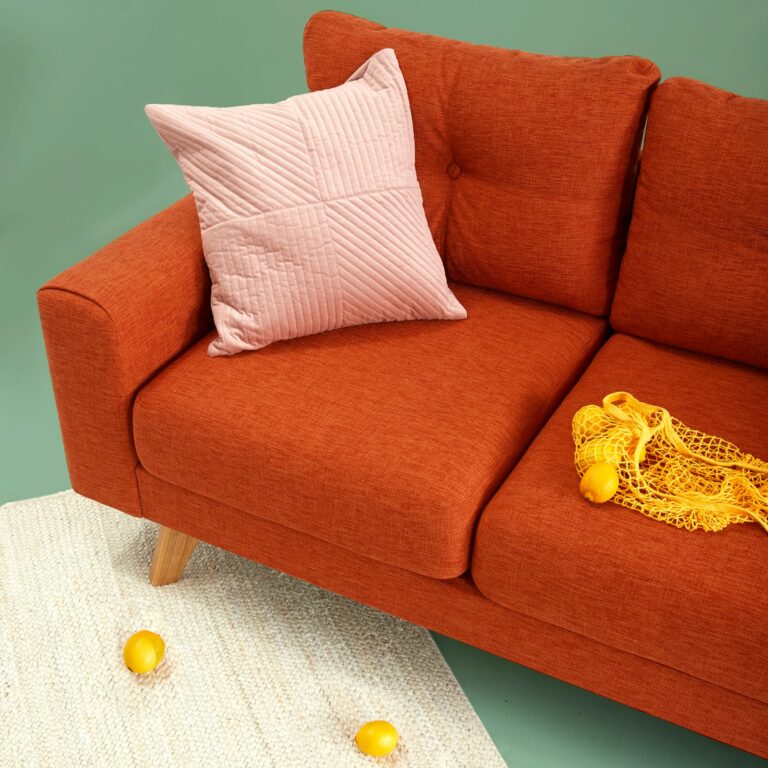
- Jute and sisal look wonderful and feel like a doormat. Use them where people stand, not where they sit on the floor — or layer a softer rug on top.
- Polypropylene is the right answer under dining tables and in homes with small children, full stop. Modern ones read convincingly as wool from standing height, and red sauce wipes off them.
When two sizes are in budget, take the bigger one — the failure mode of rugs is almost always too small, not too large.
Photography via Unsplash, used under the free Unsplash License.